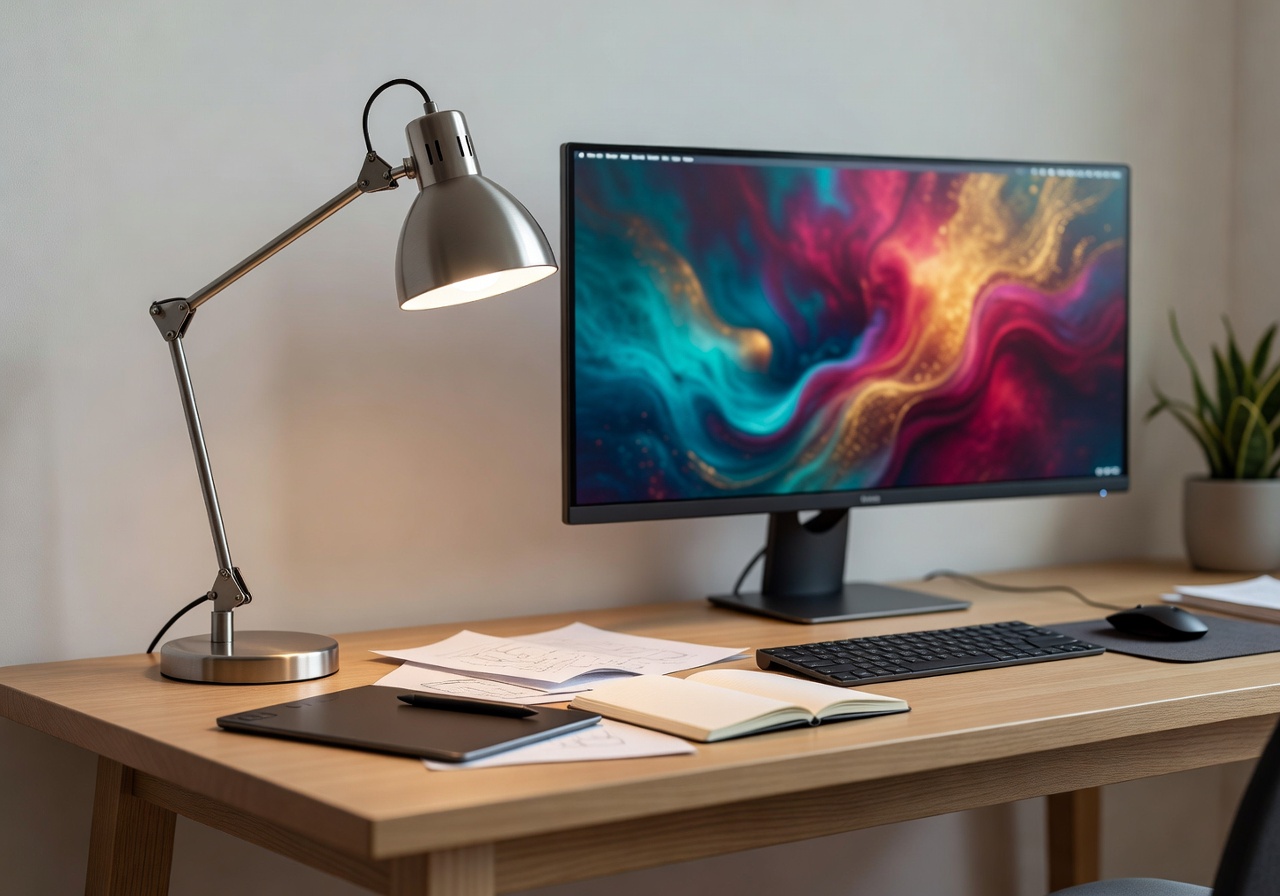
A workspace should fight for your attention as little as possible. The best setups balance ergonomic precision with quiet beauty—so you can focus on the work, not the room.
1. Start With Ergonomics
Before aesthetics, get the bones right:
- Desk height around 72–75 cm for most adults
- Monitor top edge at eye level, an arm's length away
- Chair seat parallel to your knees, feet flat on the floor
- Keyboard and mouse at elbow height to avoid wrist strain
2. Light the Work, Not the Screen
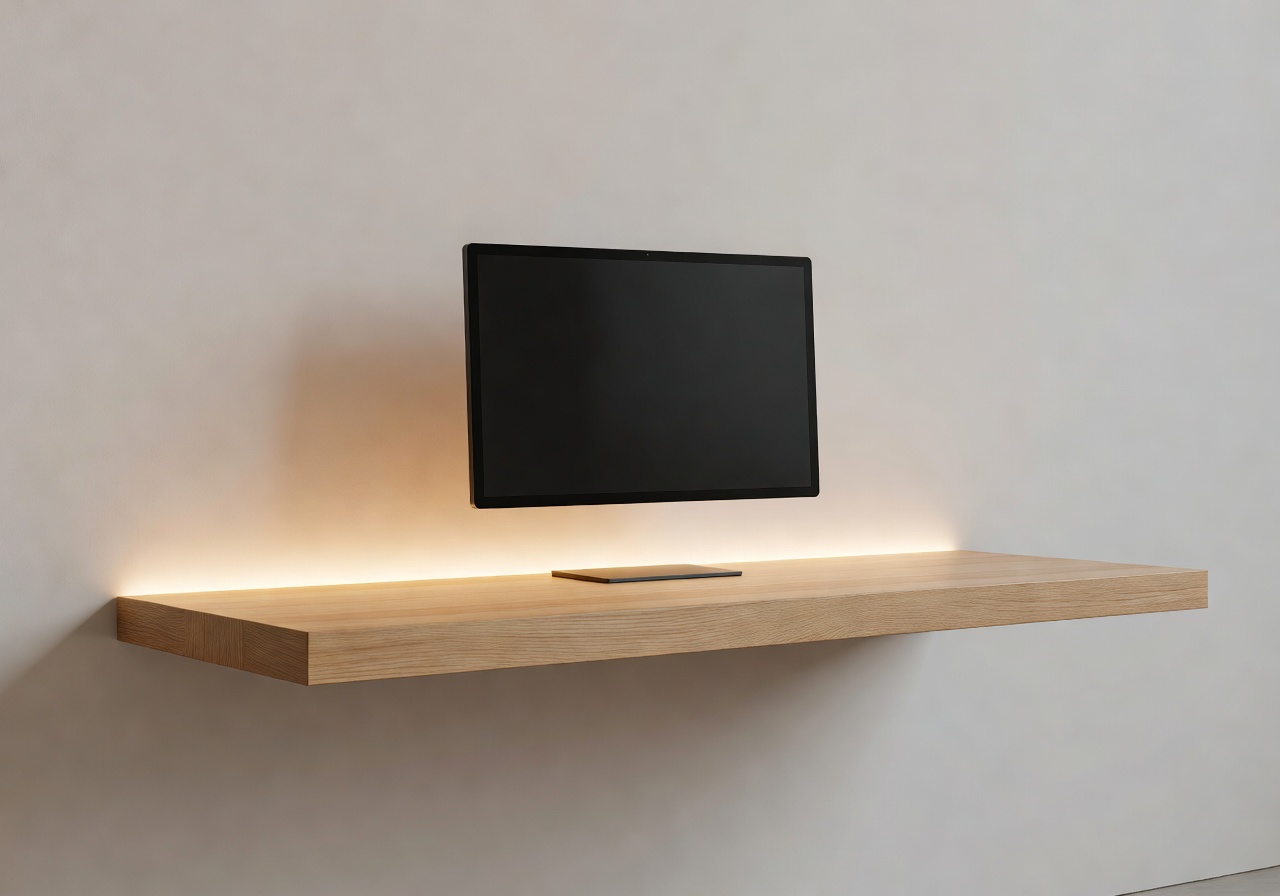
Position your monitor perpendicular to windows to avoid glare. Add a warm task lamp on the opposite side of your dominant hand. A bias light behind the screen reduces eye fatigue during long sessions.
3. Curate the Surface
A focused mind wants a focused surface. On the desk, allow only:
- Computer + keyboard + mouse
- One notebook and one pen
- A water vessel
- A single decorative object that delights you
Everything else lives in a drawer or on a shelf within arm's reach.
4. Build a Cable Management System
Visible cables drain mental energy. Use adhesive raceways, under-desk trays, and Velcro straps to group power, USB, and monitor cables. Mount a power strip beneath the desk so nothing snakes to the floor.
5. Add One Living Element
A small pothos, a snake plant, or a sprig of eucalyptus in a glass changes the energy of a desk completely. Greenery helps the eyes rest between deep-focus blocks.
"The desk you love is the desk you'll actually sit at."
6. Define a Wind-Down Ritual
At the end of each day, take 60 seconds to close apps, clear the surface, and switch off the task lamp. This small ritual signals to your brain that work is over—and makes returning to the desk tomorrow effortless.
7. Personality, Not Clutter
The most inspiring workspaces have a clear signature: a framed print, a stack of meaningful books, a piece of pottery from a trip. Choose one or two anchors, not ten.
← Back to Workspace