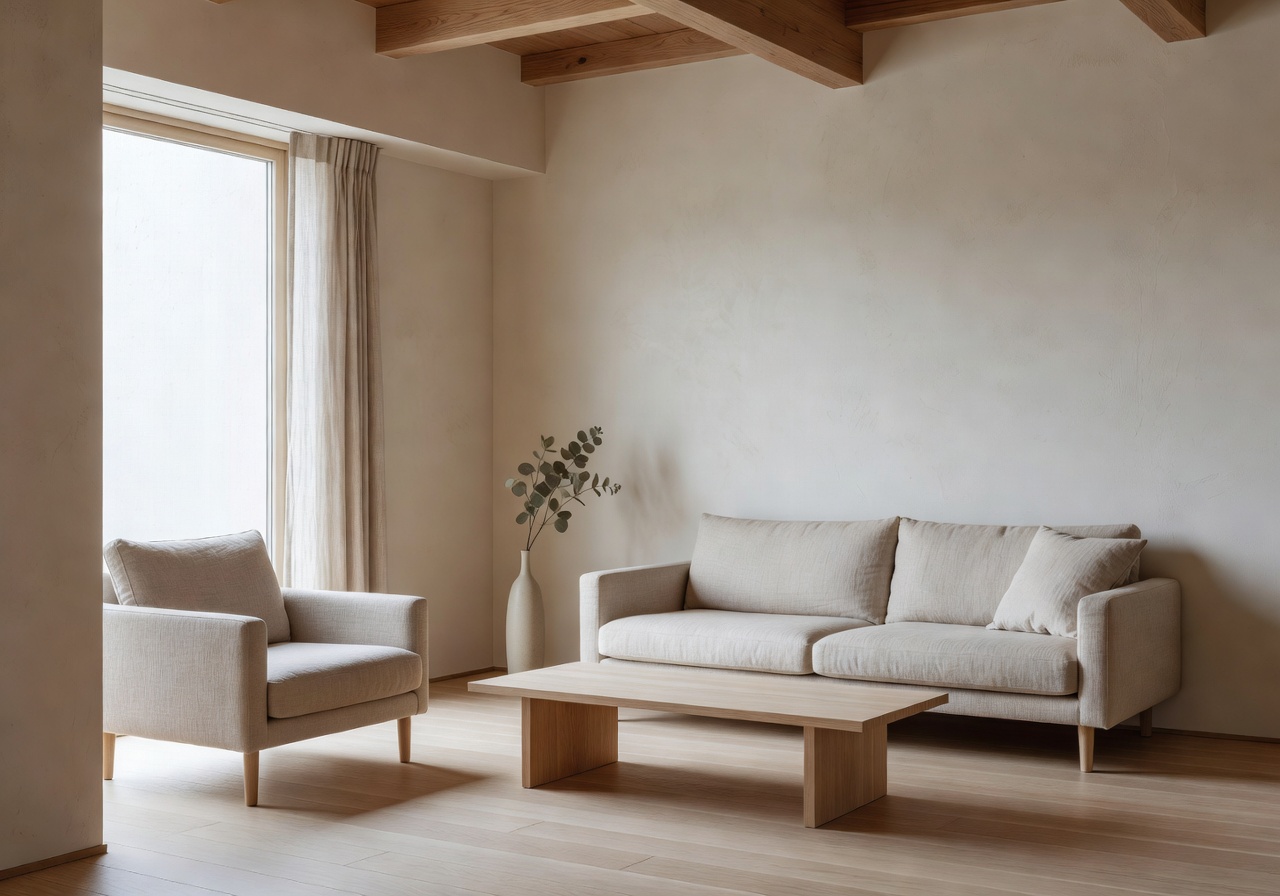
Japandi marries two of the world's most refined design philosophies: the wabi-sabi of Japan and the hygge of Scandinavia. The result is a style that feels both serene and embracing.
1. Embrace Wabi-Sabi Imperfection
Wabi-sabi finds beauty in the imperfect, the impermanent, and the incomplete. A hand-thrown ceramic with uneven edges, a wooden table with visible grain, a linen cushion with a soft wrinkle—these are not flaws, they are character.
2. Mix Light and Dark Woods
Where pure Scandi favors pale woods and pure Japanese leans dark, Japandi balances both. Light oak floors with a walnut dining table, or natural ash cabinetry beside a black-stained side stool.
3. Keep the Palette Earthy
Cream, taupe, soft black, terracotta, deep green, and clay. Japandi avoids bright colors entirely—the palette mirrors the calm of natural landscapes.
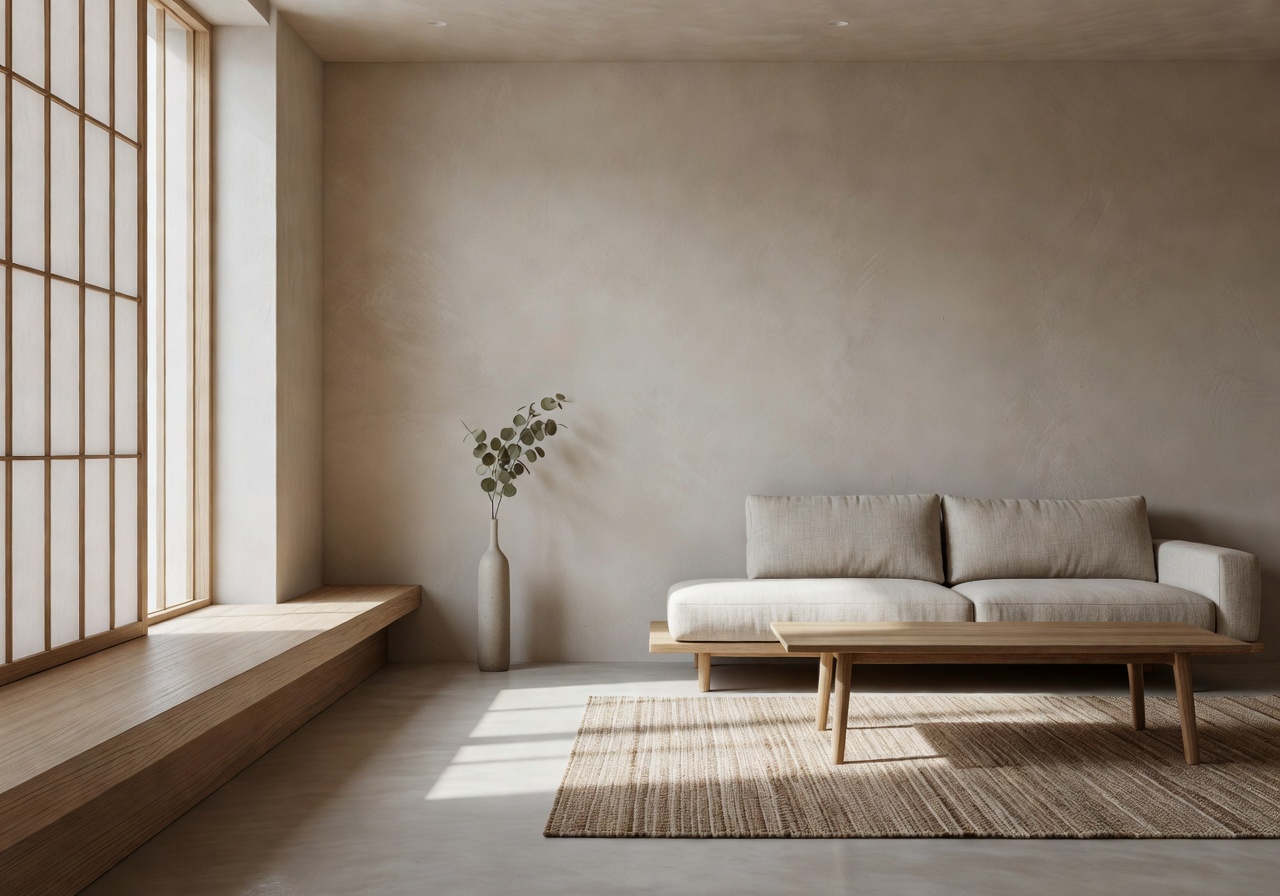
4. Low, Grounded Furniture
Japanese influence lowers the center of gravity—low sofas, futon beds, floor cushions. This grounded posture invites mindfulness and slowness into daily life.
5. Negative Space Is Sacred
Both traditions revere empty space—ma in Japanese, breathing room in Scandinavian thought. Resist filling every shelf and corner. The empty moments are part of the design.
"In Japandi, less isn't a limitation. It's the destination."
6. One Sculptural Object Per Room
A single hand-formed vase. A driftwood branch in a stoneware pot. A cast-iron tea kettle on display. One object, beautifully placed, can hold an entire room together.
7. Natural Materials Only
Stone, linen, paper, ceramic, wood, bamboo. Avoid plastics, glossy lacquers, and synthetic finishes. The connection to nature is the soul of Japandi.
← Back to Interior Guides